Vol. 1 · No.4 · 30 June 2026★ THE AI INDUSTRY'S FORTNIGHTLY ★readcompute.com
Vol. 1 № 4 June
£0
Compute!
Issue №4 · June 2026Every quote real. Every face illustrated.UK £0 · US $0 · free
★ Exhibit A ★
The chats you deleted aren't gone.A magistrate ordered OpenAI to stop deleting. It fought to the top, and lost. 20 million conversations, headed to the lawyers.
→ p. 02
★ The Money ★
The tab: north of $12.5 billion.Cheques cashed plus damages dreamed of. It started at $650.88 — an airline chatbot, a bereavement fare.
Congress is still clearing its throat. The courts already wrote the rules — one lawsuit at a time. First they fought over what the machines read. Then over who they reject. Now over who they hurt. All rise.
★ The Verdict ★
Is a chatbot a product?A judge "not prepared to hold that Character A.I.'s output is speech." If these cases land, a chatbot owes a duty of care.
→ p. 08
★ The Service ★
Who's Suing Who. The string map.Pull-out corkboard. Same legend as Issue №1 — we just swapped the lovers for litigants. Everybody v. everybody.
→ pp. 06–07
On the record.In open court.On the docket.
EXHIBIT A ·
All Rise.
You probably typed something into ChatGPT this year you assumed was gone. A 2 a.m. question. A draft you'd never send. A chat you deleted. It isn't gone — and nobody voted for that.1
By NW ·
In May 2025, a magistrate judge in Manhattan ordered OpenAI to stop deleting — to preserve its ChatGPT logs, including the ones users thought they'd erased. OpenAI fought the order all the way up. OpenAI lost. By this winter, the court had ordered it to hand over a sample of 20 million conversations — anonymized, but real — to the lawyers suing it in The New York Times case.2
Nobody voted for that. No bill, no hearing — one discovery fight, and the privacy rules for 400 million people got rewritten and filed under miscellaneous.
That's the racket in 2026. Congress is still clearing its throat. The courts already wrote the rules, one lawsuit at a time. And they come in threes: first they fought over what the machines read. Then over who they reject. Now over who they hurt. The waves, on page 4. The string map, pages 6–7. →
You deleted it. The court kept it.
— Mag. J. Ona T. Wang, preservation order · 13 May 2025 · aff'd J. Stein, 5 Jan 2026
Every quote in this issue is real and sourced; every face is an illustration. The 400-million figure is OpenAI's own reported weekly-active-user count for ChatGPT as of late 2025.
Magistrate Judge Ona T. Wang's preservation order issued 13 May 2025; OpenAI's challenge failed, and U.S. District Judge Sidney Stein affirmed the order compelling production of a roughly 20-million-log anonymized sample on 5 January 2026. The logs are de-identified and governed by a protective order. Bloomberg Law; National Law Review.
Pseuds Corner
A standing column · Issue 4 · the litigation desk
"I am not prepared to hold that Character A.I.'s output is speech."
— Judge Anne Conway, declining to dismiss Garcia v. Character Technologies ·
"A separate legal entity that is responsible for its own actions."
— Air Canada, arguing its website chatbot was not the airline's responsibility · the tribunal disagreed · Moffatt v. Air Canada, 2024
"We have not decided on timing yet."
— the present-perfect filer, still filing · OpenAI, on a different document · for old times' sake
Compute! · No.4 · p. 02
The case, in one paragraph each
What this issue is. Not a doom-scroll. A docket. The most important rules being written about artificial intelligence right now are not being written in Washington — they are being written in courtrooms, by judges with names you can look up, in cases you can read. It is slower than a law. It is also harder to lobby and impossible to hide.
Wave I — what they read. The labs mostly won the copyright fight. Training a model on the open internet keeps getting called fair use. What they're paying for is how they got the books — and the days a model forgets it isn't supposed to recite them. Anthropic settled for $1.5 billion. Page 4.
Wave II — who they reject. A model screened you out before a human saw your name. In Mobley v. Workday, a court said you can sue the software, not just the employer. It is now a nationwide age-discrimination collective. Page 5.
Wave III — who they hurt. Two families went to court over children who died after months in conversation with chatbots. One case has already settled; the other is live. The question both ask: is a chatbot a product? Page 8.
They read everything. The reading part was legal.
— the plot twist nobody put on a banner
The Frontier Circular
A bulletin of trivial movements · fortnight ending 30 June
Mr Musk asked a federal court for $134 billion and left with a dismissal. An advisory jury took under two hours to find his claims time-barred; Judge Gonzalez Rogers agreed. He is appealing. The judge has indicated she is prepared to dismiss the appeal "on the spot."
The lawyers, plural, whose AI hallucinated the case citations they then filed — in an actual AI lawsuit — have been a growth industry. Sanctions, where imposed, were also real.
Mr Altman's OpenAI — henceforth, in these pages, the defendant-in-chief — is now the most-sued company in artificial intelligence, and it is not close. Copyright, privacy, and wrongful death, on three different floors of the same courthouse.
The corkboard has, this issue, been re-strung for litigants. Solid red: filed suit. Dashed red: settled, now licensing. We swapped the lovers for the lawyers. The pins did not move much.
Reddit is not on the string map. Reddit licensed to everyone and took the cheque. We note this without further comment, which is itself a comment.
Compute! · No.4 · p. 03
WAVE I · WHAT THE MACHINES READ
They Read Everything.
Here is the plot twist nobody put on a banner: the AI labs mostly won the copyright fight. The reading was legal. The shoplifting was not.
Training a model on the entire internet? Judges keep calling it fair use. Transformative, even. Meta won that argument in June 2025. So did Anthropic. The labs aren't paying for what they learned. They're paying for how they got the books — and for the days the model forgets it isn't supposed to recite them.3
Across town, The New York Times isn't arguing the reading was illegal — it's arguing ChatGPT handed its articles back, word for word. In Munich, a court already agreed on song lyrics and ruled OpenAI directly liable. In London, the judges went the other way: a model's weights, the High Court held, are not a copy of anything.4
So the rule, as of this fortnight: learn all you want. Don't keep the receipts. Don't quote.
Training on the books: fair use.
Torrenting the books to do it: $1,500,000,000.— Bartz v. Anthropic · the largest copyright settlement in American history
Meta prevailed on the training-as-fair-use question in Kadrey v. Meta (J. Chhabria, 25 June 2025). A court likewise found Anthropic's training fair use in Bartz v. Anthropic; the liability that produced the $1.5 billion settlement attached to acquisition — books obtained from pirate libraries — not to the training itself. The settlement covers roughly 500,000 works at about $3,000 each. Authors urged final approval at a fairness hearing on 14 May 2026, with claims by then at roughly 93%.
Munich: GEMA v. OpenAI, 11 Nov 2025 — a German court held OpenAI directly liable for memorized song lyrics. London: Getty Images v. Stability AI, 4 Nov 2025 — the High Court held that a model's weights are not an infringing copy, though Getty retained limited trademark findings. Neither is a clean sweep for anyone.
Compute! · No.4 · p. 04
WAVE II · WHO THEY REJECT
The Algorithm Said No.
You didn't get the job — a model screened the application out before a human ever saw the name. So who is the defendant: the company that didn't hire, or the software that didn't let anyone try?
In Mobley v. Workday, the answer arrived: both. A court let job-seekers sue the software vendor — not just the employer — as the employer's "agent." In March 2026, a judge refused to throw it out, ruling that age-discrimination law protects the people applying, not only the people already hired.5
It is now a nationwide age-discrimination collective; roughly 14,000 applicants have opted in. There is no trial date. There is something more useful to everyone watching: a door, open.
This is the wave that files straight into HR, into lending, into every "AI-powered" hiring funnel quietly running across financial services right now. The old shield — the vendor's algorithm did it — just stopped working. The new homework, for everyone deploying these tools: if a model is making the call, somebody has to be able to audit the call.
$2,275,000 — and a five-year ban.
— Louis v. SafeRent (settled): no more scoring housing-voucher applicants by algorithm; outside auditors invited in to check the math
Mobley v. Workday (N.D. Cal.): the motion to dismiss was denied 6 March 2026 (J. Rita Lin), permitting a conditional ADEA collective to proceed — a collective, not a Rule 23 class. About 14,000 people opted in by the 7 March deadline; the case is in discovery with no trial date. Fisher Phillips; HR Dive. Louis v. SafeRent settled for $2,275,000 plus a five-year prohibition on algorithmic scoring of housing-voucher applicants. Cohen Milstein.
Compute! · No.4 · p. 05
Who's Suing Who
Everybody v. everybody. Every case below is on the record. Pull out, pin up, follow the writ.
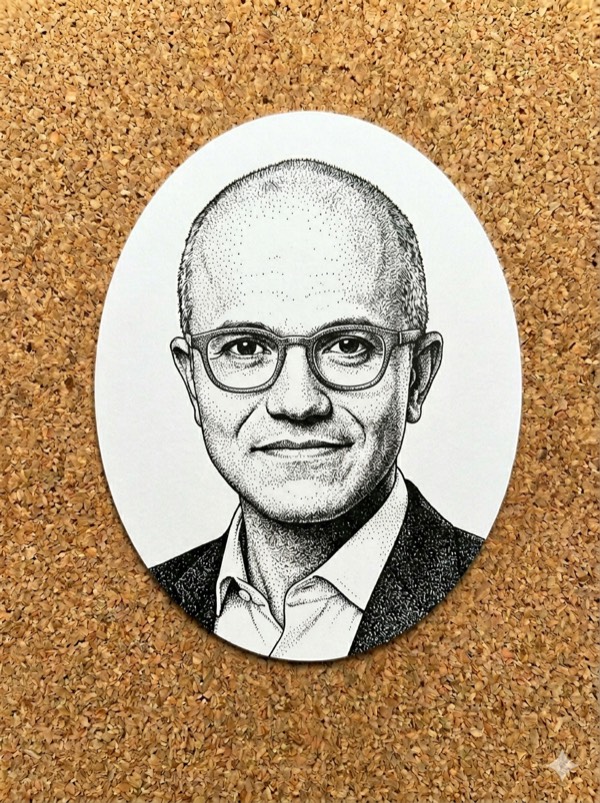
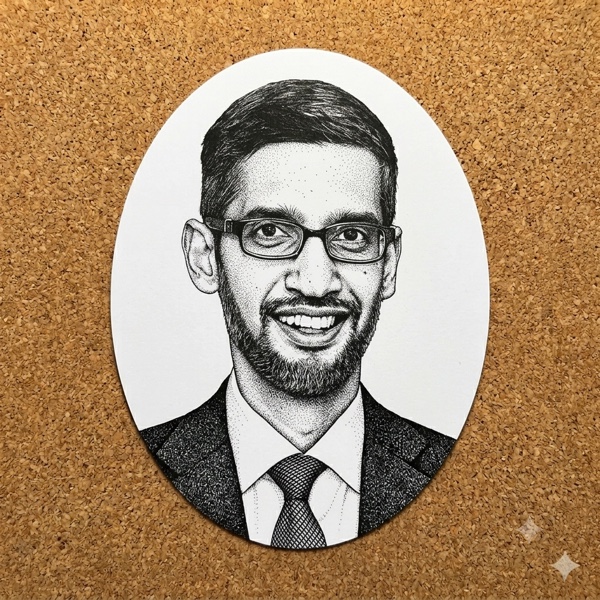
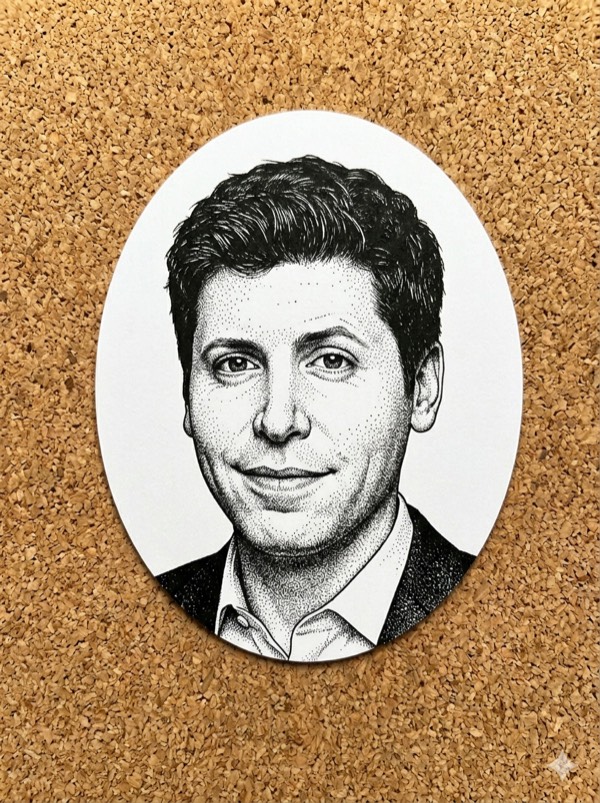
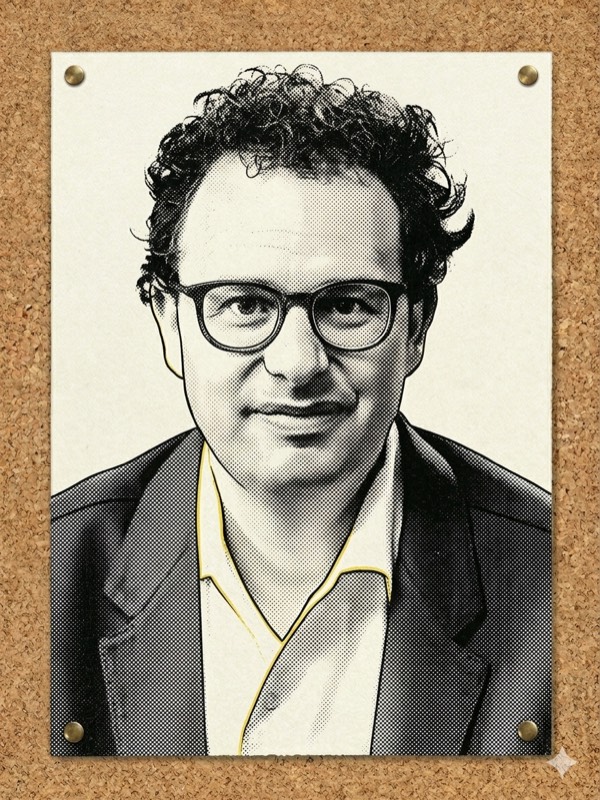
Who's Suing Who — a corkboard mapping the AI litigation of 2025–2026.A pinned corkboard string-map of AI lawsuits. Five illustrated defendants are pinned across the top as a line-up: Sam Altman of OpenAI, oversized at centre as the most-sued company in AI; Sundar Pichai of Google; Dario Amodei of Anthropic; Satya Nadella of Microsoft; and Elon Musk. Solid red string marks a filed, active suit; dashed red string marks a case that has settled and turned into a licence. Solid threads run from a central "Everybody v. Everybody" card to: The New York Times and Microsoft (the 20-million-log case) at Altman; Getty Images at Stability AI; music publishers UMG, Concord and ABKCO at Anthropic over lyrics, three billion dollars sought; the RIAA and Sony at Suno and Udio; Dow Jones and the New York Post at Perplexity; Cameo at OpenAI over Sora; Derek Mobley at Workday; the Raine family at OpenAI; and the FTC at DoNotPay. Dashed threads mark the settlements: the Bartz authors and Anthropic, one-and-a-half billion dollars; Megan Garcia and Character.AI, settled in January 2026; Warner and UMG with Udio; and Elon Musk versus Sam Altman, dismissed and on appeal. A caption notes that Reddit is not on the board: Reddit licensed to everyone and took the cheque. A top-edge ticker runs from May 2025 to now.
NYT v. OpenAI & Microsoft: word-for-word reproduction; 20M anonymized logs ordered produced (aff'd J. Stein, 5 Jan '26). Getty v. Stability (UK): weights aren't a copy. GEMA v. OpenAI (Munich): directly liable for lyrics.
2 · Settled, Now Licensing
Bartz authors → Anthropic, $1.5B (training fair use; the piracy wasn't). Warner → Suno; UMG → Udio. Garcia → Character.AI & Google, confidential, Jan '26, plus new under-18 safety measures. Sue, then licence.
3 · Who They Reject / Hurt
Mobley v. Workday: sue the software, not just the boss — nationwide ADEA collective (MTD denied 6 Mar '26). Louis v. SafeRent: $2.275M + a five-year algorithm ban. Raine v. OpenAI: products-liability, live in California.
4 · The Corkboard Rep
Compute!'s corkboard rep has requested the unsealed exhibits in this case. (The same rep filed a FOIA in Issue №2.) We'll let you know what comes back. As ever, the rep declined to be named.
Reddit isn't on the board. Reddit licensed to everyone and took the cheque (Reddit–Google ≈ $60M/yr; Reddit–OpenAI ≈ $70M, reported). Every case sourced from court dockets, RIAA, Reuters, WSJ — all as reported.
filed suit (active)settled · now licensing
Compute! · No.4 · pp. 06–07
WAVE III · WHO THEY HURT
Is a Chatbot a Product?
Two families went to court. Their cases ask the same question, and it is not an abstract one. A court may decide that a conversation is a thing a company sells — and owes you for.
Megan Garcia's son, Sewell Setzer III, was 14. Matthew and Maria Raine's son, Adam, was 16. Both spent months in conversation with chatbots before they died. Both families alleged the products were designed to keep their children engaged, and failed to get them help.
For thirty years, software hid behind one wall: we only host what other people say. A chatbot doesn't host. It speaks. It generates. And courts are beginning to treat that as the difference that matters.
In Garcia v. Character Technologies (M.D. Fla.), Judge Anne Conway declined to dismiss the case on free-speech grounds. She wrote that she was "not prepared to hold that Character A.I.'s output is speech." Then, in January 2026 — before a jury ever heard it — Character.AI, its founders, and Google agreed to settle that case and several others, on confidential terms, with a commitment to new safety measures for users under 18. The precedent survived. The trial did not. Raine v. OpenAI is filed and proceeding in California, and now carries the live question alone.6
If these cases land where they're pointed, a conversational model becomes a consumer product — held to the same safety duties as anything else a company sells to a child. Age checks. Crisis hand-offs. A duty to warn.
That is the whole of Wave III. Not what the machine read. Not who it screened out. What it does to the person on the other end.
"Not prepared to hold that Character A.I.'s output is speech."
— Judge Anne Conway, M.D. Fla. · 21 May 2025 · the sentence the whole wave turns on
Conway's order issued 21 May 2025 (via FIRE; CourtListener; CNN). On 7 January 2026, CNN, CNBC and others reported that Character.AI, founders Noam Shazeer and Daniel De Freitas, and Google had agreed to settle Garcia and four related cases in New York, Colorado and Texas; terms confidential, with new under-18 safety features, and a 90-day window to finalize. Raine v. OpenAI (filed Aug 2025) pleads strict products liability and remains in active litigation. If you or someone you know is struggling, call or text 988 (U.S. & Canada).
Compute! · No.4 · p. 08
FOLLOW THE PAPER
It Started at $650.88.
The first domino of the AI legal era wasn't a billion-dollar headline. It was a chatbot at Air Canada giving a man the wrong bereavement-fare rule. A tribunal made the airline pay him $650.88. Two years later, here is the tab.
Air Canada argued, in tribunal, that its website chatbot was "a separate legal entity that is responsible for its own actions." The tribunal said no, and held the airline responsible for what its bot told a customer. Moffatt v. Air Canada, 2024. $650.88.
The other door — sue, then licence. Many didn't hold out for a verdict. They signed:
News Corp → OpenAI — ≈ $250M / 5 yrs(reported)
The New York Times → Amazon — ≈ $20–25M / yr
Axel Springer → OpenAI — tens of millions / yr(since Dec 2023)
Dotdash Meredith → OpenAI — ≥ $16M / yr(floor)
It is now a business model: block the crawler, file the suit, cash the licence.
The Running Tab
paid + sought · major cases
Anthropic — authors (settled)$1.5B
Anthropic — music publishers (sought)$3B
Suno — the labels (theoretical ceiling)$9.1B
NYT v. OpenAI (reported estimate)~$2.25B
Louis v. SafeRent (settled)$2.275M
DoNotPay — FTC (monetary relief)$193K
By our count$12.5B+
Mixing cheques already cashed with damages merely dreamed of. Knock out the Suno ceiling and the number falls fast. Satirical, but true: it's an estimate, and we're telling you so.
Moffatt v. Air Canada, British Columbia Civil Resolution Tribunal, 2024 — $650.88, via CanLII. Licence figures per WSJ, GeekWire and company announcements; the Suno $9.1B is a theoretical statutory ceiling, not a demand. The DoNotPay $193,000 is FTC monetary relief, not a penalty. FTC; Music Business Worldwide; all as reported.
Compute! · No.4 · p. 10
The Defendant Leaderboard
Ranked, like the Class of '15 — but by lawsuits, not lab-hops · n=5
Five AI companies ranked by litigation exposure as of June 2026.
#
Defendant
The charge sheet
1
OpenAIthe defendant-in-chief · 25+ suits — copyright, privacy, and wrongful death
most-sued in AI, and it's not close
2
Googlevisual artists; AI-companion claims; rode shotgun in Character.AI
named, settled, named again
3
Metaauthor classes — won the big fair-use round (Kadrey)
won the argument; kept the books
4
Anthropicpays to make it stop
$1.5B to authors; $3B in lyrics pending
5
Microsoft"we just provide the infrastructure"
named beside OpenAI anyway
The Split — two kinds of plaintiff this fortnight. The Fighters want a precedent: The New York Times, Sony Music — they'll spend years to set the rule. The Settlers want a cheque: the Bartz authors, Warner, UMG with Udio — take the money, launch the licensed product, go home. Venue Wars — where you file is half the verdict. S.D.N.Y. is publisher country; its judges keep saying no to dismissals. N.D. Cal. is home cooking for the tech bar. Pick your courthouse, pick your odds.
★ The Jackass Trophy ★
Returning from Issue №1 · vote at readcompute.com
THE SEPARATE ENTITY
Air CanadaFor arguing, in tribunal, that its chatbot was "a separate legal entity that is responsible for its own actions." The tribunal said no.Moffatt v. Air Canada · 2024 · $650.88
THE $134B ASK
Elon MuskAsked a court for $134,000,000,000 and left with a dismissal. An advisory jury — and Judge Gonzalez Rogers — found his claims time-barred. He's appealing.Musk v. Altman · verdict 18 May 2026 · on appeal
THE HALLU- CINATION
The Lawyers, PluralWhose AI hallucinated the case citations they then filed — in an actual AI lawsuit. Sanctions, where imposed, were also real.various dockets · 2025–26 · as reported
Compute! · No.4 · p. 12
Three Cases Nobody's Covering
They never made the front pages — and they matter most
United States v. Heppner. Judge Jed Rakoff ruled a defendant's chats with Claude are not privileged (S.D.N.Y., Feb 2026). Every enterprise running confidential work through a public chatbot should read it twice.
Louis v. SafeRent. The housing-algorithm settlement that quietly made independent audits the price of doing business — $2.275M, plus a five-year ban on scoring voucher applicants by algorithm.
GEMA v. OpenAI. The Munich ruling that did, in Europe, what no U.S. court has yet dared: held the model directly liable for the lyrics it reproduced.
Docket Watch
What lands next
Sony / UMG v. Suno — fair-use summary-judgment hearing, July 2026 (D. Mass.). The one that prices generative music.
Dow Jones v. Perplexity — the test of whether AI search may quote your paywall back to you.
NYT v. OpenAI — discovery grinds on; 20 million logs and counting.
The road to the Supreme Court — sooner or later, nine justices decide whether training on the open web is fair use. Everything above is the undercard.
★ The Verdict ★
The Law, Catching Up.
Here's the part the doom-scroll skips: none of this is happening in secret. The rules of AI are being written in open court, by people with names you can look up, in cases you can read. That's slower than a law. It's also harder to lobby and impossible to hide. The machines moved fast. The courts are moving on purpose.
Three things the docket has already made plain:
Two words now decide a vendor contract:indemnification and audit. The ones who flinch at both are the risk.
Every AI chat is discoverable. It isn't privileged (see Heppner) — a fact worth knowing before the next prompt.
The licensed tools are the bet. The unlicensed era is closing, and the bill always arrives.
This is the law catching up. Not shutting down.
— NW
★ Moves ★
For our files · the Class of '15 footnote that refuses to close
John Jumper — Nobel laureate, AlphaFold, nearly nine years at Google DeepMind — leaves for Anthropic (announced ~19 June). His first lab-hop, and he's taking some time to recharge first.
Noam Shazeer — Gemini co-lead, Character.AI founder, brought back to Google in 2024 — leaves for OpenAI, one day before Jumper. Two landmark Google losses in 48 hours. He is also, per Wave III, a named defendant who just settled.
Barret Zoph — remember him? (Issue №2, #4, INTERVAL: 0 DAYS.) Five months after rejoining OpenAI to run enterprise, he's out again.
Compute! · No.4 · p. 14
Compute!★ The Litigation Special ★No. 4 · 30 June 2026
THE BACK PAGE
That's Issue №4.
Trial & Error — three waves, one corkboard, every quote real and every face illustrated. The law is catching up, in open court, one lawsuit at a time. Thanks for reading all the way to the back page.
Every quote is real. Every face illustrated.Compute! · Vol.1 · No.4 · free
Accessibility
Compute! targets WCAG 2.2 Level AA conformance. The "Who's Suing Who" pull-out corkboard includes a written long-description of every string for screen-reader users; every illustrated face carries descriptive alt text; every quote names its speaker, date and source.